Rotar Cuff Tendonitis
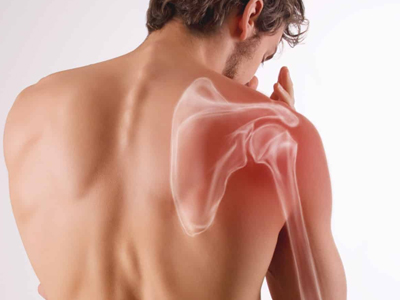
Tendonitis is a common cause of shoulder pain and impingement in athletes. In this condition, the rotator cuff tendons—the vital thick bands of tissue that stabilize the shoulder joint—become inflamed and swollen. This inflammation often occurs within the narrow subacromial space; as the tendons swell, they become pinched during arm movements, leading to a cycle of irritation, further swelling, and decreased mobility. Rotator cuff tendonitis can be either primary due to faulty biomechanics or secondary due to excessive loading due to a predisposition such as poor scapulohumeral rhythm. In addition, several trigger points (knotted muscle tissue) are set off throughout the muscular structures of the shoulder, making certain movements restricted and painful.
The client usually complains of movements such as reaching above the head, behind the back as well as racquet sports, shoulder military presses, etc. On examination, there may be tenderness over the supraspinatus tendon, pectorals, infraspinatus, and the posterior deltoid structures. Ultrasound scan can also confirm a tear in some of the tendons.
Treatment is usually performed in two parts:
Phase One:
The focus is to treat the tendonitis with digital ischaemic pressure, progressing to transverse frictions throughout the tender bands in the neighbouring muscles that attach and support the shoulder. Dry needling (IMS) is used to desensitize and relax the trigger points and taut bands of resistive muscles.
Phase Two:
This stage involves a comprehensive stretching programme of the shoulder and all of its associated muscle groups, along with functional movement re-education and a targeted strengthening programme.
With KC-Physio, most rotator cuff injuries are significantly improved, if not fully resolved, within 4 to 5 treatments.
 KC-PHYSIO


