Achilles Tendonitis
The Achilles tendon is the largest tendon in the body and can withstand heavy loads of tension for long periods. However, this structure is largely avascular, meaning it possesses a very limited blood supply. This lack of nutrient-rich blood flow is a critical factor in why the condition is often slow to heal, as the body cannot quickly deliver the necessary oxygen and reparative cells to the site of injury. Causative factors include poor footwear, changes in running surfaces, ballistic jumping, and poor calf or soleus flexibility.
Irritation to the Achilles tendon is the most common injury in the lower ankle region. This is typically secondary to muscle shortening of the gastrocnemius, soleus, plantaris, and plantar flexor structures. These muscles directly and indirectly affect the tendon, causing mechanical overload at the point where it connects to the heel bone. In many cases, the retro-calcaneal bursa—a fluid-filled sac located at the base of the tendon attachment—also becomes inflamed, adding to the localized discomfort.
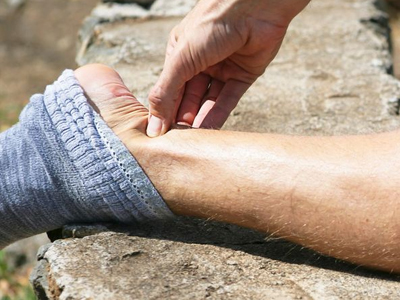
Patients usually notice a gradual development of symptoms, typically complaining of pain and stiffness immediately upon rising in the morning. This discomfort often eases with movement or training, only to recur several hours later. On examination, tenderness is felt with digital pressure to the calf, and extreme pain is often elicited by squeezing the tendon near the heel.
The KC-Physio Treatment Approach
Phase One: Pain Reduction and Tissue Release Treatment initially focuses on reducing inflammation using ice, ultrasound, and electrotherapy. A heel raise may be used to temporarily offload the tendon. We then perform transverse and longitudinal frictions over the paratendon, alongside myofascial release for the calf and sole of the foot. Dry needling (IMS) is also employed to release tight muscle bands throughout the posterior compartment of the lower leg.
Phase Two: Extensibility and Strengthening The next step is to restore full extensibility to the tendon. This is achieved through an active stretching programme in standing and kneeling positions. Once the acute pain has dampened, a specialized strength programme is introduced. This consists of eccentric loading—the process of lengthening the muscle under tension—which promotes new collagen formation along the tendon. This physiological remodeling is essential for increasing the elastic and tensile properties of the tissue, ensuring it can handle future stress.
Finally, a functional movement programme is provided to ensure a safe return to sport. At KC-Physio, we pledge that within 4 to 5 treatments, Achilles tendonitis will show significant improvement or be fully resolved.
 KC-PHYSIO


